The True Cost of Running Your Rental Business on Spreadsheets
Spreadsheets are free to use and familiar to everyone — which is why so many rental operators stay on them too long. The real cost shows up in double bookings, wasted hours, and a ceiling on how much you can grow.
Marcus Chen
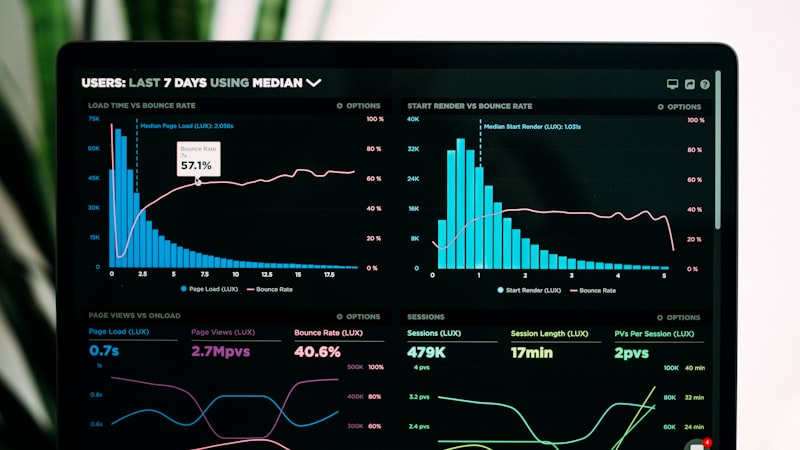
Most rental businesses start on spreadsheets. You track your inventory in one tab, your bookings in another, your customers in a third. It works well enough in the beginning — when you have 50 items and 10 bookings a month, a spreadsheet is more than sufficient. The problem is that rental operators often stay on spreadsheets long after the operation has grown past the point where they work well, because the alternative requires switching costs that feel larger than the problems being created. They rarely are.
The Time Cost: Hours Spent on Manual Updates
Every booking that comes in requires a manual update to your availability tracker. Every returned item requires a check against the booking record. Every customer inquiry requires you to look across multiple sheets to confirm whether you have what they need on the date they're asking about. These tasks each take a few minutes — but they compound across every booking, every week, every season.
For a rental business doing 40–60 bookings a month, the administrative overhead of maintaining accurate spreadsheets often adds up to 10–15 hours per week. That's time that could be spent on sales calls, delivery optimization, or simply taking a day off. When you switch to rental management software, most of that overhead is automated. Availability updates when a booking is created. Customer records populate from the booking form. Your team stops being data entry operators and starts being operators.
The Error Cost: Double Bookings and Availability Mistakes
Spreadsheets have no enforcement mechanisms. Two people can edit the same document simultaneously with no conflict detection. An availability check is only as accurate as the last person who updated it. Filters can be applied that hide rows without anyone realizing — and items that look available are actually committed to another event.
A double booking in the rental business isn't just an inconvenience — it's a crisis. Someone has to call a customer before their event and tell them part of their order can't be fulfilled. That conversation damages trust in a way that's very hard to recover from. And in a market driven by referrals and reviews, a customer who experienced a fulfillment failure is far less likely to refer you and far more likely to leave a review that mentions it.
The Visibility Cost: No Real-Time Picture of Your Business
A spreadsheet tells you what you put in it. It doesn't tell you what percentage of your inventory is utilized this month compared to last. It can't show you which items are being repaired more often than average. It won't flag that you have three orders on the same Saturday that collectively require more delivery hours than your crew can handle.
Running a rental business on spreadsheets means making operational decisions without the visibility to make them well. You find out about problems when they've already become problems — an overbooked delivery day, a category that's been underpriced all season, a customer segment that's quietly been the source of most of your damage claims. Software surfaces these patterns in real time.
The Scaling Cost: Spreadsheets Break as You Grow
The most insidious cost of spreadsheets is what they do to your growth ceiling. As booking volume increases, the time required to maintain accurate spreadsheets increases proportionally — which means adding revenue requires adding admin labor rather than becoming more efficient. The business gets harder to run as it gets bigger, when the opposite should be true.
Operators who move to dedicated rental management software at 30 bookings a month can handle 120 bookings a month with the same admin team, because the software absorbs the work that was previously manual. The businesses that stay on spreadsheets either hire more admin staff to keep up, or they plateau — held at a booking volume their spreadsheet infrastructure can support.
What the Switch Actually Costs
The objection most operators raise against rental software is the cost. It's a real consideration — a monthly subscription to a platform like RentalCrafter is a line item that wasn't there before. But that number needs to be compared honestly to what spreadsheets actually cost: the admin hours spent on manual updates, the revenue lost to double bookings, the customer relationships damaged by fulfillment failures, and the growth limited by an infrastructure that can't scale.
In most cases, the software pays for itself in the first month through time savings alone. The margin improvement that comes from eliminating errors and the revenue growth that becomes possible when your team isn't buried in admin work compound significantly beyond that.
The question isn't whether you can afford rental management software. It's whether you can afford to keep running on spreadsheets while your market moves to operators who don't.
Conclusion
Spreadsheets aren't bad tools — they're the wrong tool for a rental business operating above a certain volume. The time they cost, the errors they enable, the visibility they deny, and the ceiling they place on growth add up to a real business cost that most operators underestimate because it's distributed across dozens of small inefficiencies rather than appearing as a single line item. If your rental business has grown past the point where a spreadsheet feels easy, that discomfort is telling you something worth listening to.
Explore More Rental Guides
- Boost Your Event Business with Event Rental Management Software
- Enhance Your Event Operations with Event Rental Management Software
- Maximize Your Event Success with Event Rental Management Software
- Revolutionize Your Event Planning with Event Rental Management Software
- Streamline Your Events with Event Rental Management Software
- Transform Your Event Planning with Event Rental Management Software
- Simplifying Operations in Event and Party Rental Businesses with Software
- Rental Business Ideas: Ride the Sharing Economy Wave to Success
- Unlock Efficiency: How Online Booking Management Tools Can Scale Your Business
- Mastering Inventory and Equipment Management for Rental Businesses
- How to Position Your Rental Business Against the Competition
- Why Online Booking Is No Longer Optional for Rental Operators
- The Hidden Revenue in Your Rental Business You're Probably Leaving Behind
- How to Expand Into New Equipment Categories Without Overextending
- Repair vs. Retire: A Decision Framework for Aging Rental Equipment
- Building a Loyalty Program for Repeat Rental Customers
- The Customer Onboarding Checklist Every Rental Business Needs
- How to Handle Missing or Damaged Rental Equipment Without Losing the Customer
- How to Launch a Referral Program That Works for Rental Operators
Try Rental Crafter
Rental Crafter helps event and party rental teams manage inventory, bookings, contracts, and customers in one place. Explore our product features, pricing plans, documentation, free trial signup, party rental software.
Run your rental business smarter
Rental Crafter helps event and party rental teams manage inventory, bookings, and customers in one place.
Free 14-day trial · No credit card required
Related articles

Elena Vasquez
How to Handle Missing or Damaged Rental Equipment Without Losing the Customer
Equipment gets damaged. Items go missing. What separates rental businesses that keep customers through those moments from ones that lose them is a consistent, professional process.
Read article: How to Handle Missing or Damaged Rental Equipment Without Losing the Customer →
Priya Sharma
Mastering Inventory and Equipment Management for Rental Businesses
Learn the secrets to managing inventory and equipment in the rental industry and why it’s essential for success.
Read article: Mastering Inventory and Equipment Management for Rental Businesses →
Elena Vasquez
Repair vs. Retire: A Decision Framework for Aging Rental Equipment
Holding on to aging equipment too long is a quiet drain on revenue, reputation, and margins. Here's how to make the repair-or-retire decision with confidence.
Read article: Repair vs. Retire: A Decision Framework for Aging Rental Equipment →